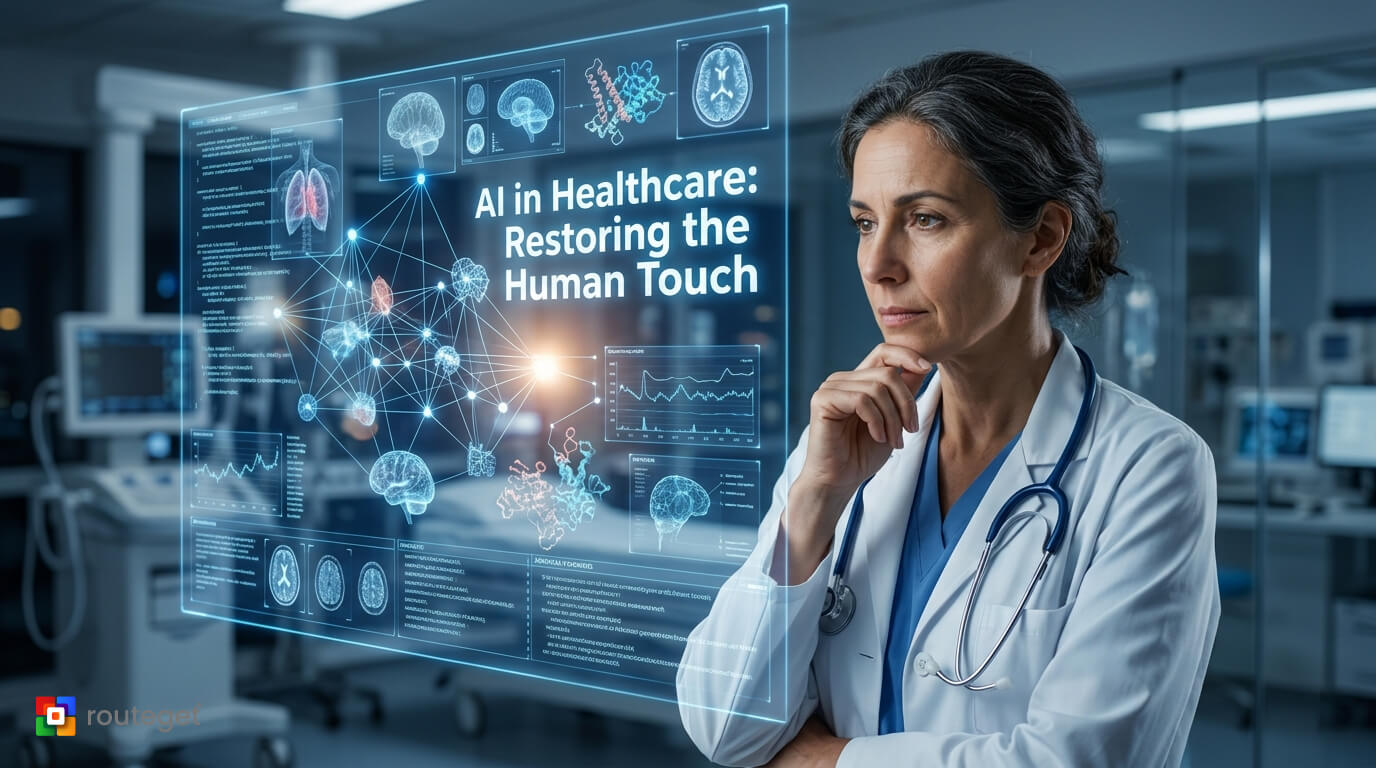
The landscape of global healthcare is undergoing a transformation so profound that it rivals the discovery of antibiotics or the advent of medical imaging. At the heart of this revolution is artificial intelligence, a technology that is rapidly moving from the realm of science fiction into the everyday reality of clinics, pharmacies, and hospital wards. For decades, the medical profession has been grappling with a dual crisis of escalating operational costs and an exhausted workforce. Doctors and nurses, drawn to their professions by a desire to heal, have increasingly found themselves buried under mountains of administrative paperwork, wrestling with inefficient software, and fighting losing battles against logistical bottlenecks. This administrative burden not only contributes to severe burnout among healthcare professionals but also detracts from the very essence of medical practice, which is the direct, human connection between a caregiver and a patient. Today, however, artificial intelligence is emerging as a powerful ally in the quest to restore balance to healthcare systems around the world. By automating routine tasks, analyzing vast datasets to uncover hidden patterns, and providing real-time cognitive support, these advanced digital tools are allowing medical professionals to reclaim their time and refocus their energy on patient care. This shift is not about replacing the human element in medicine, but rather about amplifying it, ensuring that clinicians have the resources and the mental bandwidth to practice at the absolute top of their licenses.
To understand the sheer scale of this transformation, one must look beyond the theoretical promises of technology companies and examine the practical realities of hospitals and healthcare facilities that are already integrating these systems into their daily operations. Across the globe, from the bustling emergency dispatch centers of Germany to the independent community pharmacies of Kenya, artificial intelligence is proving its worth in highly complex, high-stakes environments. The integration of these tools requires careful planning, rigorous testing, and a deep understanding of the unique workflows that characterize medical environments. When managing a thirty-five-bed public hospital, for instance, the challenges of resource allocation, staff scheduling, and patient throughput require solutions that are both scalable and acutely sensitive to local realities. The introduction of intelligent algorithms into such settings can mean the difference between a facility that merely survives and one that actively thrives, serving its community with efficiency and grace. It is within these operational crucibles that the true value of medical innovation is tested and refined.
The journey toward an intelligent healthcare system is multifaceted, touching upon every aspect of the patient experience and hospital administration. It involves the deployment of ambient listening technologies that draft clinical notes in real time, freeing doctors from their keyboards. It encompasses predictive models that anticipate patient deterioration before it happens, allowing nurses to intervene proactively. It includes robust cybersecurity measures that protect sensitive patient data from increasingly sophisticated ransomware attacks, ensuring the continuity of care even in the face of digital threats. Furthermore, the application of artificial intelligence extends far beyond the walls of the hospital, empowering patients with rare diseases to find accurate diagnoses more quickly and enabling pharmacists in developing nations to manage their life-saving inventories with unprecedented precision. As we explore these diverse applications, a unified theme begins to emerge, highlighting a future where technology serves as an invisible but indispensable scaffolding, supporting the fragile and profoundly human endeavor of healing.
In this comprehensive exploration, we will delve into the myriad ways artificial intelligence is reshaping the operational and clinical landscapes of modern medicine. We will examine real-world case studies that illuminate the practical benefits and the inevitable challenges of deploying these systems. We will also consider the strategic implications for healthcare administrators tasked with drafting long-term business operations and management agreements, ensuring that digital transformation aligns with broader goals of financial sustainability and equitable patient access. The transition to a technologically augmented healthcare model is not merely a matter of purchasing new software, but rather a fundamental reimagining of how care is delivered, measured, and continuously improved. As we navigate this complex terrain, it becomes increasingly clear that the organizations that will define the future of medicine are those that embrace innovation not for its own sake, but as a vital instrument for elevating the human condition.
The front lines of healthcare often begin long before a patient arrives at the hospital doors, starting the moment a call for help is placed. In emergency dispatch centers, operators face an incredibly high-pressure environment where every second counts and the ability to distinguish between a life-threatening crisis and a routine medical transport can mean the difference between life and death. The Munich Fire Department provides a compelling example of how artificial intelligence can alleviate the relentless pressure on these vital communication hubs. Like many emergency services worldwide, the Munich dispatchers were frequently overwhelmed by a high volume of non-emergency calls, such as requests for routine patient transports between medical facilities. These calls, while necessary, consumed valuable time and cognitive energy that needed to be reserved for critical emergencies. To address this challenge, the department collaborated with technology experts to design an intelligent operator system capable of handling routine transport requests autonomously.
This artificial intelligence operator was built using advanced natural language processing and speech recognition technologies, allowing it to converse with callers in multiple languages. The system asks targeted questions to verify critical details regarding the transport, such as the patient’s current location, their destination, and any specific medical requirements for the journey. By offloading these routine interactions to a digital assistant, the human dispatchers are freed to focus their undivided attention on high-priority calls, such as heart attacks, severe accidents, or acute respiratory distress. Importantly, the system is designed with a steadfast commitment to human oversight, seamlessly transferring any complex or ambiguous calls back to a human operator the moment it detects a potential emergency or confusion. This collaborative approach ensures that the efficiency gains of automation never compromise the safety or the quality of care provided to the public.
The successful implementation of such systems requires a deep understanding of the operational realities faced by emergency responders. The Munich project was notably driven by the people who know the job firsthand, including firefighters, paramedics, and the dispatchers themselves. This grassroots involvement is crucial for ensuring that technological solutions are tailored to the actual workflows and the nuanced demands of the environment, rather than being imposed from the top down by software developers unfamiliar with the field. When deployed effectively, these intelligent dispatch systems have a profound ripple effect throughout the broader healthcare ecosystem. For a regional multispeciality hospital, smooth and predictable patient transport logistics are essential for managing bed availability and ensuring that patients receive timely care. By streamlining the coordination of these movements, artificial intelligence helps hospitals maintain an optimal flow of patients, reducing bottlenecks in emergency departments and maximizing the utilization of specialized medical resources.
Perhaps no issue in modern medicine is as universally lamented by physicians as the overwhelming burden of clinical documentation. The advent of electronic health records, while intended to improve the organization and the accessibility of patient data, has inadvertently turned highly trained medical specialists into highly paid data entry clerks. Doctors routinely spend hours outside of their scheduled shifts, a phenomenon colloquially known as pajama time, typing up notes, coding diagnoses, and fulfilling bureaucratic requirements. This administrative overload is a primary driver of clinician burnout, contributing to a sense of professional dissatisfaction and, ultimately, driving many talented individuals away from the practice of medicine altogether. To combat this crisis, healthcare organizations are increasingly turning to ambient clinical intelligence, a transformative application of artificial intelligence that promises to restore the sanctity of the patient-doctor relationship.
At the Manchester University NHS Foundation Trust in the United Kingdom, doctors are pioneering the use of ambient listening tools designed to capture the natural conversation between a clinician and a patient. Instead of splitting their attention between the patient and a computer screen, physicians can now engage fully in the consultation, maintaining eye contact and actively listening to the patient’s concerns. In the background, an intelligent digital assistant securely records the interaction, transcribes the dialogue, and uses natural language processing to automatically extract the relevant medical information. The system then organizes this data into a structured clinical note, complete with symptoms, diagnoses, and proposed treatment plans, ready for the physician to review and approve. This seamless integration of technology into the clinical workflow has yielded remarkable results, with doctors reporting significant time savings per patient encounter. When accumulated over the course of a busy day, these saved minutes translate into hours of reclaimed time, allowing clinicians to see more patients, engage in deeper medical research, or simply go home to their families at a reasonable hour.
Similar successes are being observed across the Atlantic at Intermountain Health, a large nonprofit healthcare system in the Western United States. Facing rising clinician burnout and complex documentation demands, the organization deployed an artificial intelligence-powered workflow assistant directly integrated into its electronic health record system. By scaling this technology to thousands of active clinicians, Intermountain Health has not only accelerated the documentation process but also significantly reduced the cognitive load placed on its medical staff. When doctors are not constantly worrying about remembering every detail for later transcription, they can think more clearly, diagnose more accurately, and communicate more empathetically. This improvement in the working conditions of healthcare providers directly correlates with an enhancement in the quality of care received by the patients, creating a virtuous cycle of well-being that benefits the entire healthcare community.
For administrators managing hospital operations, the implementation of ambient clinical intelligence represents a strategic investment with profound implications for both financial sustainability and the quality of care. In a thirty-five-bed facility where staffing levels must be meticulously balanced against patient volume, maximizing the clinical efficiency of every doctor and nurse is paramount. By reducing the time spent on paperwork, hospital management can increase patient throughput without necessarily having to hire additional, hard-to-find specialists. Furthermore, the standardized, highly detailed notes generated by these systems often lead to more accurate medical coding, ensuring that the hospital is properly reimbursed for the services it provides. When drafting a comprehensive business operations and management agreement, specifying the inclusion and the maintenance of such advanced digital infrastructure is essential for setting the facility on a trajectory of long-term operational success.
The delivery of effective healthcare relies heavily on a complex, often fragile supply chain that must ensure the right medications and the right medical supplies are available at the exact moment they are needed. In many parts of the world, particularly in developing nations, this supply chain is fraught with inefficiencies, leading to frequent stockouts of critical drugs and significant financial losses due to expired inventory. Small, independent pharmacies, which serve as the primary point of care for countless communities, are especially vulnerable to these logistical challenges. In Kenya, an innovative approach using artificial intelligence is demonstrating how digital tools can empower these vital community health providers, transforming their operations from reactive and chaotic to predictive and highly organized.
An application developed specifically for the African pharmacy market serves as a prime example of this logistical revolution. The software helps independent pharmacists digitize their inventory management, moving away from error-prone pen-and-paper ledgers to a centralized digital tracking system. By analyzing historical sales data, seasonal health trends, and local demographic information, the artificial intelligence engine can accurately forecast the future demand for specific medications. This predictive capability allows pharmacists to order exactly what they need when they need it, dramatically reducing the amount of capital tied up in excess stock and virtually eliminating the problem of medicines expiring on the shelves. Furthermore, the application leverages this organized sales and inventory data to generate reliable credit scores for the pharmacies, enabling them to secure loans from financial institutions to expand their operations, hire more staff, or invest in better medical equipment.
The principles underlying this smart pharmacy management system are equally applicable, and arguably even more critical, within the complex environment of a multispeciality hospital. Managing the inventory of a medical facility involves tracking thousands of distinct items, ranging from common analgesics and surgical masks to highly specialized chemotherapy drugs and delicate implantable devices. Traditional inventory management systems often rely on manual stock counts and rigid reordering thresholds, which cannot easily adapt to sudden surges in patient volume or unexpected disruptions in the global supply chain. By integrating predictive analytics into hospital logistics, administrators can create a dynamic, highly responsive supply chain that anticipates needs before they become critical shortages. For instance, if an intelligent system detects a rising trend of respiratory illnesses in the surrounding community, it can automatically suggest increasing the stock levels of inhalers, oxygen masks, and relevant antibiotics, ensuring the hospital is fully prepared for the incoming wave of patients.
Effective resource management is a cornerstone of any successful hospital operation, directly impacting both the quality of patient care and the financial viability of the institution. When negotiating operational agreements for public healthcare facilities, ensuring that the supply chain is resilient and cost-effective is a major priority for all stakeholders involved. Advanced digital logistics platforms offer a level of transparency and accountability that manual systems simply cannot match, providing administrators with real-time dashboards that track spending, monitor waste, and highlight areas for operational improvement. By optimizing the flow of physical goods through the hospital, artificial intelligence allows clinical staff to focus entirely on the delivery of care, confident in the knowledge that the tools and the treatments they require will always be readily at hand.
The process of diagnosing a medical condition is often portrayed as a swift, logical deduction, but for millions of patients suffering from rare or complex diseases, the reality is a prolonged, agonizing journey marked by misdiagnoses, unnecessary tests, and worsening symptoms. The sheer volume of medical knowledge expands exponentially every year, making it impossible for any single physician, regardless of their dedication or brilliance, to be intimately familiar with every known pathology. This inherent limitation of human memory and processing power creates a significant barrier to accurate and timely diagnosis, particularly in general practice settings or smaller regional hospitals that lack a deep bench of highly specialized experts. Artificial intelligence, with its ability to rapidly ingest, cross-reference, and analyze vast libraries of medical literature and patient data, is uniquely positioned to break down this barrier, democratizing access to world-class diagnostic insights.
The story of a Spanish family navigating the devastating reality of Dravet syndrome, a severe and rare neurological condition, starkly illustrates the profound human impact of this diagnostic delay. After enduring ten months of terrifying uncertainty and ineffective treatments for their infant son’s relentless seizures, the family finally received an accurate diagnosis. Driven by this harrowing experience, the boy’s father, a software engineer, recognized that the pattern-matching capabilities of artificial intelligence could be harnessed to spare other families from a similar ordeal. The resulting collaborative effort led to the creation of a diagnostic support tool built on advanced cloud computing and natural language processing architectures. This system allows doctors, and even patients themselves, to input a detailed constellation of symptoms, medical history, and test results. The algorithm then scours extensive medical databases to suggest potential diagnoses, including incredibly rare conditions that might never cross the mind of a general practitioner.
The integration of such intelligent diagnostic tools into public health systems represents a massive leap forward in clinical capability. By providing physicians with a highly sophisticated second opinion, these systems reduce the cognitive burden on medical staff and drastically shorten the time it takes to arrive at a correct diagnosis. This acceleration is critical because, for many conditions, early intervention is the key to preventing irreversible damage or dramatically improving the long-term prognosis. In a multispeciality hospital setting, where patients frequently present with overlapping symptoms and complex comorbidities, a diagnostic artificial intelligence can serve as an invaluable unifying tool, helping specialists from different departments connect the dots and formulate a cohesive, accurate clinical picture. It bridges the knowledge gaps between different medical disciplines, fostering a more collaborative and holistic approach to patient care.
As healthcare systems become increasingly reliant on digital technologies, electronic health records, and interconnected medical devices, they also become prime targets for malicious cyberattacks. The data held within a hospital’s servers, encompassing intimate medical histories, personal identification details, and financial information, is incredibly valuable on the black market. Consequently, the healthcare sector faces a relentless barrage of cyber threats, ranging from sophisticated phishing campaigns to crippling ransomware attacks. A successful breach not only compromises patient privacy but can also bring hospital operations to a grinding halt, forcing medical staff to revert to manual processes, delaying critical treatments, and putting patient lives at imminent risk. The reality of modern medical administration is that robust cybersecurity is no longer a peripheral IT concern, but rather a central pillar of patient safety and institutional survival.
The experience of the Osaka General Medical Center in Japan serves as a stark and sobering reminder of these vulnerabilities. When a severe ransomware attack struck the facility, the consequences were immediate and catastrophic. Critical servers became completely inaccessible, locking doctors and nurses out of patient records, disabling internal communication networks, and severing connections to essential diagnostic equipment. While the hospital managed to restore its systems after two arduous months, the leadership recognized that a fundamental paradigm shift in their security posture was urgently required. To prevent a recurrence, they turned to advanced, artificial intelligence-powered security architectures designed to proactively identify and neutralize threats before they can establish a foothold within the network. These sophisticated defense systems utilize machine learning algorithms to continuously monitor network traffic, analyzing patterns of behavior to detect anomalies that might indicate a developing attack, such as unauthorized access attempts, unusual data transfers, or the sudden encryption of files.
In addition to detecting threats, these intelligent security platforms implement dynamic access controls, utilizing risk-based analysis to ensure that only authorized personnel can access sensitive systems, and only under secure conditions. If an employee’s login credentials appear to be compromised, or if an access request originates from a suspicious location, the system can automatically require additional verification or block the connection entirely. For administrators managing public hospitals or negotiating comprehensive operational agreements, the inclusion of state-of-the-art, proactively intelligent cybersecurity measures is an absolute necessity. A failure to adequately protect the digital infrastructure not only exposes the institution to massive financial liabilities and regulatory penalties but also fundamentally breaches the trust that patients place in their healthcare providers. A secure hospital is the foundation upon which all other digital innovations must be built.
The traditional model of healthcare delivery is predominantly reactive, focusing on diagnosing and treating illnesses or injuries after they have occurred. While this approach will always be a necessary component of medicine, the rising costs of care and the increasing prevalence of chronic conditions are forcing healthcare systems to shift their focus toward proactive prevention. By intervening early, before a minor health issue escalates into a major medical crisis, hospitals can significantly lift patient outcomes while simultaneously reducing the financial burden on the healthcare system. Artificial intelligence, particularly the field of predictive analytics, is the technological engine driving this transition from reactive treatment to proactive health management. By analyzing vast amounts of historical and real-time patient data, machine learning algorithms can identify subtle risk factors and predict potential adverse events with remarkable accuracy.
The Ribera healthcare network, operating numerous hospitals and medical centers across Europe, provides a compelling illustration of this proactive approach. The organization faces the universal challenges of managing an aging population, increasing demand for services, and constrained operating budgets. To address these pressures, Ribera has extensively deployed machine learning models designed to predict and prevent common but serious hospital complications, such as patient falls and the development of pressure ulcers. Pressure ulcers are a significant concern in any inpatient setting, causing severe pain for the patient, increasing the risk of deadly infections, and adding significantly to the cost and the length of a hospital stay. By analyzing data points such as a patient’s age, mobility, nutritional status, and underlying medical conditions, the predictive algorithm identifies individuals who are at the highest risk, automatically alerting the nursing staff to implement preventive measures, such as specialized mattresses or more frequent repositioning schedules.
Similarly, predicting the risk of a patient falling allows the care team to take preemptive actions, ensuring that vulnerable individuals receive the necessary assistance when moving around the ward. These targeted interventions, guided by intelligent analytics, demonstrate how technology can directly enhance patient safety and comfort. Beyond clinical complications, predictive models are also being applied to broader hospital operations, such as anticipating patient admission rates and optimizing bed management. By forecasting the expected influx of patients based on historical trends, seasonal variations, and current public health data, hospital administrators can adjust staffing levels and allocate resources more efficiently, ensuring that the facility is prepared to meet the demand without resorting to expensive emergency measures or compromising the quality of care.
The management of public healthcare facilities often involves intricate partnerships between government entities and private operational management groups. These collaborations are designed to leverage the efficiency, the innovation, and the specialized expertise of the private sector to improve the delivery of public health services. Drafting and executing a ten-year business operations and management agreement for a public hospital requires a delicate balancing act, aligning the financial imperatives of the operating group with the social responsibility of providing accessible, high-quality care to the entire community. In this complex administrative environment, artificial intelligence serves as a crucial bridge, providing the data-driven insights and the operational efficiencies necessary to satisfy the demands of all stakeholders.
One of the primary challenges in managing a mid-sized facility, such as a thirty-five-bed multispeciality hospital, is achieving economies of scale. Unlike massive medical centers with vast resources, smaller hospitals must operate with intense precision, ensuring that every bed, every piece of equipment, and every staff hour is utilized optimally. Artificial intelligence excels at solving these multi-variable optimization problems. For example, intelligent scheduling algorithms can analyze the surgical caseload, the availability of specialized surgeons, the required nursing support, and the anticipated recovery time to create highly efficient operating room schedules. This reduces idle time in the surgical suites, maximizes the throughput of the facility, and minimizes the time patients spend waiting for necessary procedures. Such operational excellence is exactly what government partners look for when evaluating the performance of a private management group, making the implementation of artificial intelligence a key differentiator in securing and maintaining these lucrative contracts.
The rapid integration of artificial intelligence into healthcare is accompanied by a host of profound ethical considerations that must be navigated with the utmost care and responsibility. The decisions made in a hospital setting are inherently high-stakes, directly impacting the health, the autonomy, and the very lives of the patients. Therefore, as we delegate more analytical and administrative tasks to intelligent algorithms, we must ensure that these systems are designed and deployed in a manner that upholds the core ethical principles of the medical profession. Chief among these concerns is the issue of algorithmic bias. Artificial intelligence models learn from historical data, and if that data reflects existing systemic biases or disparities in healthcare delivery, the algorithm will inevitably learn and perpetuate those biases, potentially leading to unequal treatment recommendations or discriminatory outcomes for minority populations.
To mitigate this risk, developers and healthcare organizations must insist on utilizing diverse, highly representative datasets when training these medical models. Furthermore, the algorithms themselves must be subjected to rigorous, ongoing audits to detect and correct any emerging biases. Transparency is also crucial. The concept of a black box artificial intelligence, where the system produces a medical recommendation without providing any explanation of how it arrived at that conclusion, is fundamentally incompatible with the practice of evidence-based medicine. Clinicians must be able to understand the rationale behind an algorithm’s suggestion, evaluate the underlying data, and apply their own expert judgment before making a final decision. This principle of explainability is essential for fostering trust between the medical staff and the digital tools they are expected to use.
We stand at a critical juncture in the history of medicine, a moment where the convergence of advanced computing and biological science offers the unprecedented opportunity to fundamentally redesign how we care for the sick and manage our health systems. The integration of artificial intelligence into healthcare is not a distant, theoretical possibility; it is a present reality, unfolding in emergency dispatch centers, rural pharmacies, and major multispeciality hospitals around the world. As we have explored throughout this comprehensive analysis, the applications of this technology are as diverse as the medical field itself. From ambient listening tools that silently banish the bureaucratic nightmare of clinical documentation, to predictive algorithms that foresee patient deterioration and streamline hospital logistics, these digital innovations are systematically dismantling the inefficiencies that have long plagued the delivery of care. By embracing this technological revolution thoughtfully and responsibly, we can build a global healthcare ecosystem that is more efficient, more equitable, and profoundly more humane, ensuring that every patient, regardless of their location or their condition, receives the highest standard of care possible.
Amarnath Gupta is a visionary digital transformation leader with over two decades of experience guiding Fortune 500 organizations through enterprise-wide innovation. He has built and scaled Microsoft Dynamics 365 practices into $7.5 million revenue engines, rescued high-risk global implementations, and delivered 35 percent operational efficiency gains, 40 percent faster go-lives, and 30 percent cost optimizations across industries from manufacturing to healthcare and construction.
His passion for marrying deep technical command in Dynamics 365, Azure AI/ML, and Power Platform with strategic P&L governance has spawned proprietary IP solutions like JewelPro™ and OmniClaim Sentinel™. A catalyst for modern AMS frameworks, he leverages predictive KQL analytics and intelligent support automation to slash incident resolution times by 30 percent and cut costs by up to 30 percent.
Amarnath writes about practical strategies for data-driven decision making, end-to-end ERP/CRM implementation best practices, and the future of cloud-native architectures. His work empowers readers to transform underperforming units into high-growth engines while embedding Agile/DevOps and Zero Trust security into every layer.
- Microsoft Dynamics 365 F&O, CE, Commerce, Field Services
- Azure AI/ML integration and predictive analytics
- Enterprise Application Maintenance & Support (AMS)
- Agile/DevOps delivery and operational excellence
- Data modernization and cloud transformation

Amarnath Gupta is a visionary digital transformation leader with over two decades of experience guiding Fortune 500 organizations through enterprise-wide innovation. He has built and scaled Microsoft Dynamics 365 practices into $7.5 million revenue engines, rescued high-risk global implementations, and delivered 35 percent operational efficiency gains, 40 percent faster go-lives, and 30 percent cost optimizations across industries from manufacturing to healthcare and construction.
His passion for marrying deep technical command in Dynamics 365, Azure AI/ML, and Power Platform with strategic P&L governance has spawned proprietary IP solutions like JewelPro™ and OmniClaim Sentinel™. A catalyst for modern AMS frameworks, he leverages predictive KQL analytics and intelligent support automation to slash incident resolution times by 30 percent and cut costs by up to 30 percent.
Amarnath writes about practical strategies for data-driven decision making, end-to-end ERP/CRM implementation best practices, and the future of cloud-native architectures. His work empowers readers to transform underperforming units into high-growth engines while embedding Agile/DevOps and Zero Trust security into every layer.
- Microsoft Dynamics 365 F&O, CE, Commerce, Field Services
- Azure AI/ML integration and predictive analytics
- Enterprise Application Maintenance & Support (AMS)
- Agile/DevOps delivery and operational excellence
- Data modernization and cloud transformation