
- Home
- Industries
- Frozen Food Industry
Digital Transformation for Frozen Food Manufacturers and Cold-Chain Operators
Freezing, storage and distribution leave no room for blind spots. Routeget connects plant floor, cold storage and finance so lot, temperature and cost data move together.
30+
clients served
$15M+
Savings Delivered
15+ yrs
Serving the Sector
20+
Projects Delivered
Frozen Food: where the market stands today
A fact base for planning. All figures below are third-party research estimates, not Routeget data, and they differ by how each firm defines the market.
Convenience-led, retail and foodservice
Demand is driven by urbanisation, time-pressed households, ready-to-eat meals, and the longer shelf life that cuts food waste. Retail packs, ingredients and foodservice all draw on the same cold chain.
Roughly US$280-397 billion (2024)
Market Research Future values the global frozen foods market at US$396.88 billion for 2024. Data Bridge Market Research estimates US$280.56 billion. The gap comes from segmentation, such as retail packs versus foodservice.
Mid-single-digit growth forecast
Data Bridge projects US$403.59 billion by 2032 (4.65% CAGR). Knowledge Sourcing Intelligence forecasts US$358.46 billion by 2030 (5.08% CAGR). Technavio projects 8.1% CAGR over 2025-2030, citing ready meals and Europe.
Margin sits in yield, waste and recall readiness
Growth brings more SKUs, private-label runs and retailer compliance demands. Lot-level traceability, temperature-aware inventory and costing by batch are where data work pays back.
Sources: Market Research Future (frozen foods market, 2024 base year); Data Bridge Market Research (2024 base, 2032 forecast); Knowledge Sourcing Intelligence (2025-2030); Technavio (2025-2030). Estimates retrieved October 2026 and subject to each publisher’s definitions; verify against the publisher before citing externally.
End-to-end digital transformation
Strategy, platform selection, integration and data work delivered as one programme.
Food-industry data models
Lot, recipe, yield and co-product structures designed for process manufacturing.
Traceability by design
Forward and backward lot genealogy built into inventory and quality workflows.
Cold-chain integration
Connections to temperature monitoring, warehouse and transport systems.
Four pressures that shape frozen food operations
These are the recurring problems we see when freezing, storage and distribution run on disconnected systems.
Temperature excursions without context
A logger alarm means little if it cannot be tied to the lots, pallets and customer orders affected. Teams lose hours matching readings to stock.
Slow, partial recall response
Retailers expect fast, complete lot traceability from ingredient to shelf. Spreadsheets and paper batch records stretch response times.
Yield and cost leakage
Freezing shrink, glazing weight, giveaway and rework hide inside average costs, so product margin by SKU is rarely accurate.
Cold storage capacity and shelf-life limits
Multi-temperature space is expensive. Poor visibility on remaining shelf life drives write-offs and rushed shipments.
Capabilities built for freezing, storage and distribution
Pick the area closest to your priority. Each can be delivered on its own or as part of a wider programme.
Connect planning, recipes and the freezing line to inventory and cost, so each batch carries its own record.
- Recipe and formula management with co-product and by-product handling
- Batch and lot-controlled production orders with yield variance tracking
- Shop-floor data capture for freezer, packing and weighing steps
- Catch-weight and glaze-adjusted costing by batch
Give quality and customer service one view of every lot, from supplier receipt to customer delivery.
- Forward and backward lot genealogy across receipt, production and dispatch
- Quality holds, inspection plans and non-conformance workflows
- Customer and retailer audit evidence from a single source
- Recall simulation to test response before it is needed
Treat temperature zone, shelf life and pallet location as first-class inventory attributes.
- Multi-temperature warehouse management with putaway rules by zone
- First-expired-first-out picking driven by remaining shelf life
- Integration with temperature monitoring and transport systems
- Dock scheduling and load planning for reefer fleets
Align promotions, private-label runs and seasonal peaks with production and storage capacity.
- Demand forecasting with promotion and seasonality inputs
- Customer-specific pricing, rebates and trade-spend tracking
- Order promising against available-to-promise stock by zone
- Retailer EDI and portal connections
Report profit by SKU, customer and plant using the same data operations uses.
- Standard cost versus actual with variance by cause
- Margin reporting by SKU, customer and channel
- Executive dashboards for yield, waste and service level
- Audit-ready financial close for multi-site groups
Two scenarios where connected data changes the day-to-day
These are illustrative scenarios that describe the business objective. They are not customer case studies.
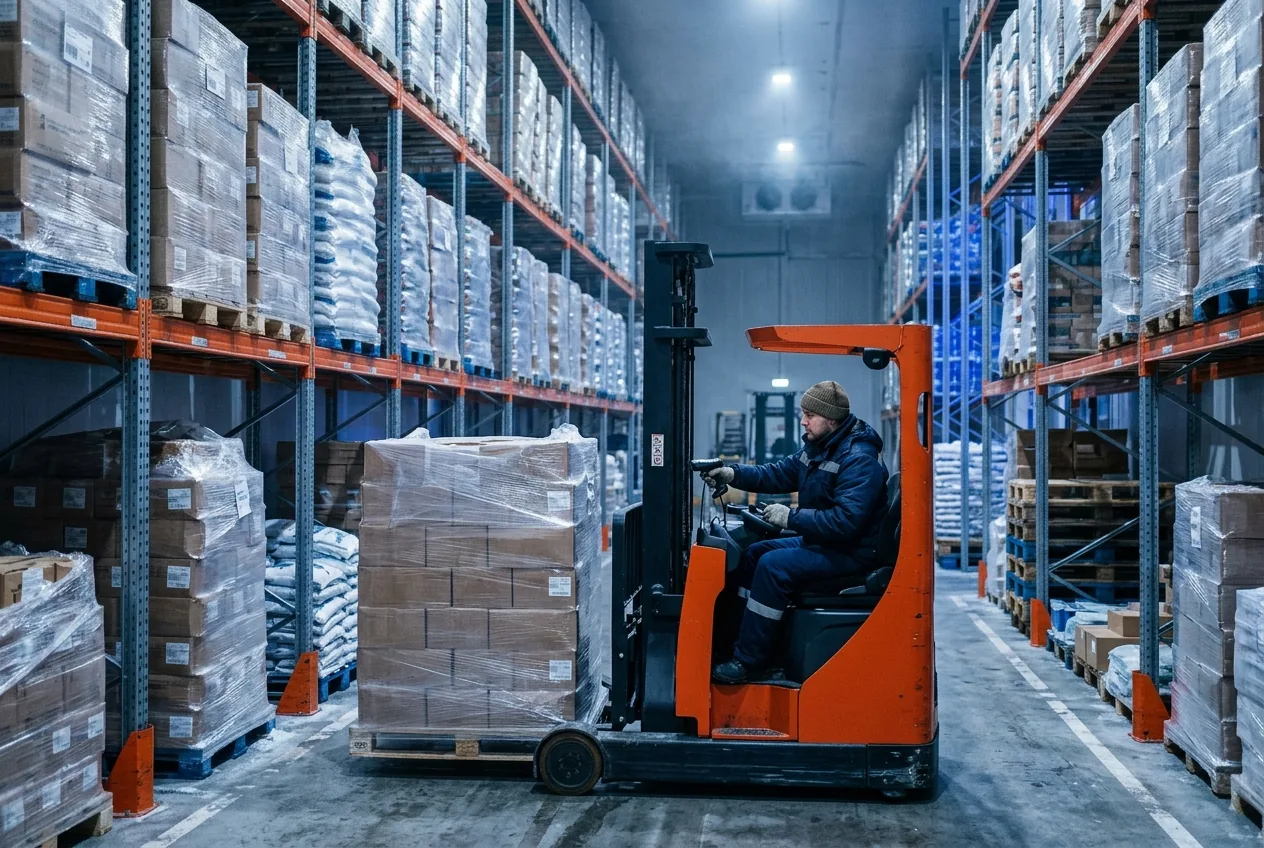
Multi-temperature storage with shelf-life-driven picking
A manufacturer holds frozen and chilled goods across several zones. Warehouse management reads lot expiry and zone rules, directs putaway, and picks the oldest suitable stock first. Customer service sees available-to-promise by zone, so orders are accepted against stock that can actually ship.
Business objective: reduce write-offs from expired stock and avoid rushed shipments.
Mock recall in minutes, not days
When a supplier flags an ingredient lot, quality enters the lot number once. The system returns every batch produced, every pallet in storage, and every customer shipment that received it, ready to hold, retrieve or notify.
Business objective: shorten recall response and give retailers complete evidence.
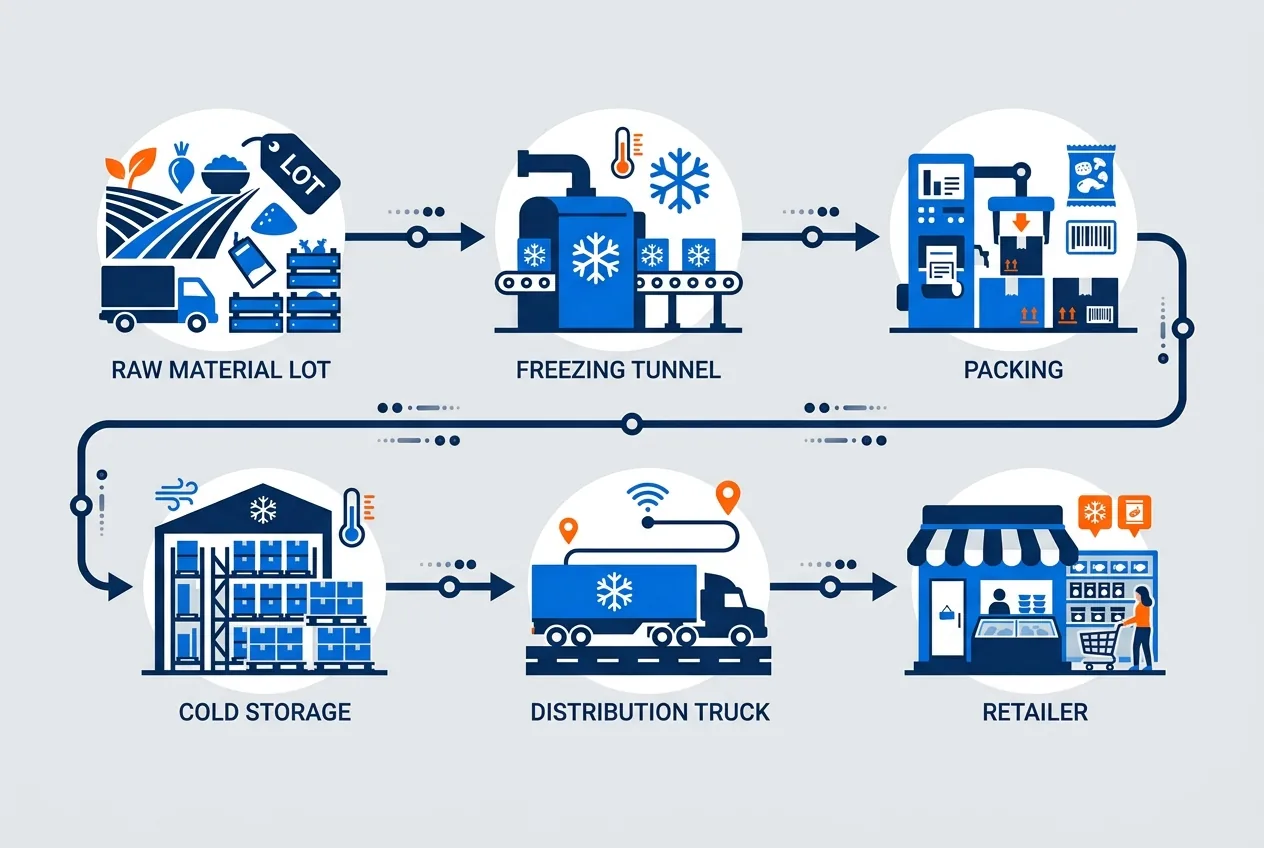
How we approach delivery and evidence outcomes
We do not publish unverified customer figures on industry pages. This is how we make outcomes measurable in an engagement.
Baseline first
We agree the starting measures with you before design: yield, write-offs, order fill and recall response time.
Delivery in stages
Plant, warehouse and finance releases are phased, so each stage can be tested against real production before the next.
Measured against your targets
Dashboards report the baseline measures from go-live, so benefit is judged on your data.
Examples of Routeget engagements can be discussed in a discovery call, subject to client approval for each reference.
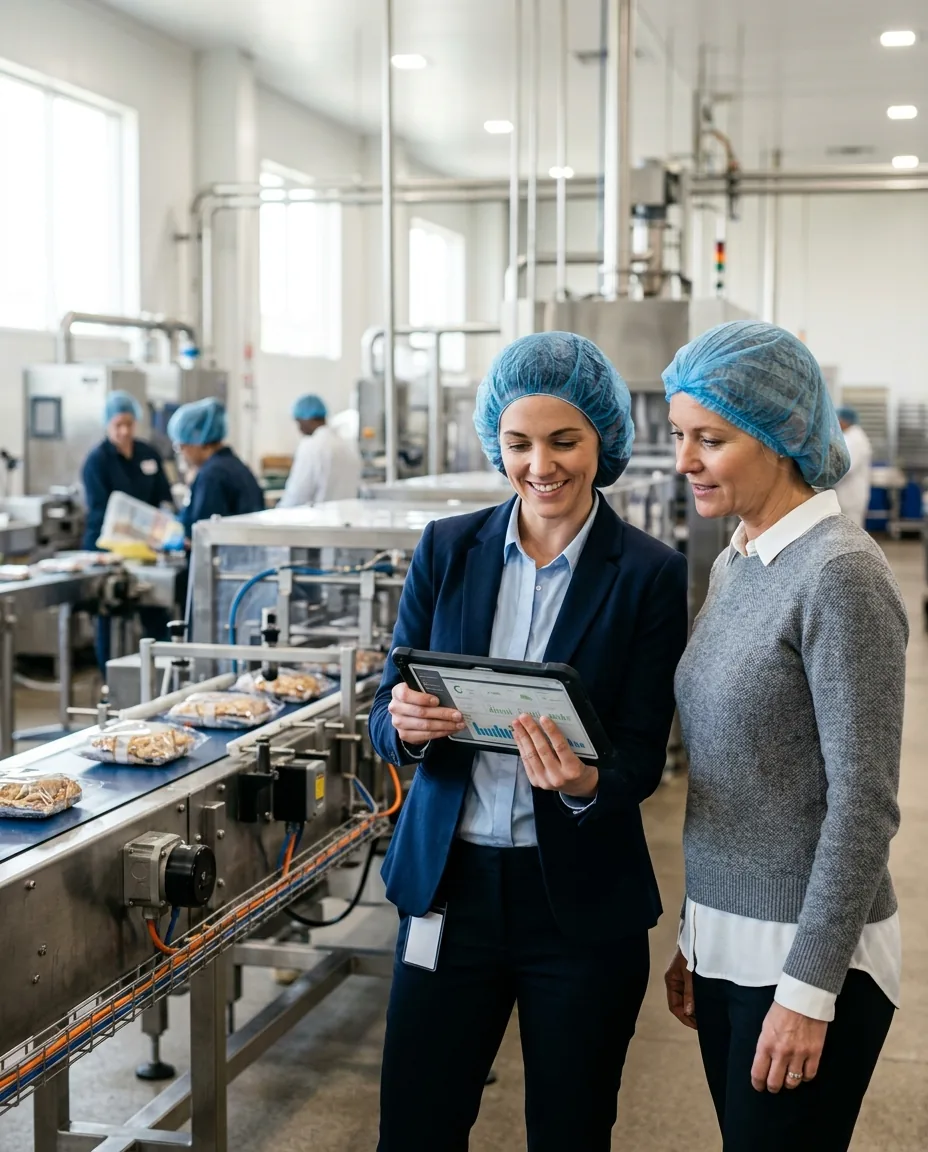
Why Routeget for frozen food
We bring a delivery approach built around the realities of cold, regulated, high-volume food operations.
Process-manufacturing depth
We model recipes, yield, co-products and catch weight as standard requirements, not custom exceptions.
Integrated, not stitched together
Plant, warehouse, quality and finance share one data model, so temperature, lot and cost reconcile.
Phased, low-disruption rollout
We plan releases around production calendars and seasonal peaks to protect service levels.
Data you can act on
Analytics are designed with the operations team, so measures reflect how your plants actually run.
Related reading from the Routeget team
Perspectives on the supply chain, data and integration topics behind this industry.
Why Automating our Supply Chain is Crucial to your Business Success
Why supply chain automation matters for service levels, cost and resilience.
The Evolving Landscape of Data Modernization Engineering
Trends in data modernization engineering and how they affect enterprise platforms.
AI attracts a new generation while assisting Argentine small producers and winemakers in competing
How AI is helping small producers compete in demanding markets.
Explore adjacent industry practices
Plan your frozen food data foundation with Routeget
Book a 30-minute discovery to walk through your plants, storage network and priorities with a Routeget industry specialist.
Your details are used only to respond to this enquiry. See our Privacy Policy.
Frozen Food: questions buyers ask us
How do you engage with a frozen food manufacturer?
We usually start with a short discovery and a process review of one plant and its storage flow. From there we propose a phased scope, which can be fixed-scope for defined releases or a time-and-materials team for ongoing improvement.
How long does a typical programme take?
It depends on the number of plants, systems to integrate and data to migrate. A single-plant release is usually planned in months, and multi-site programmes are phased. We confirm timelines only after discovery and a review of your landscape.
Can you integrate temperature monitoring and warehouse systems?
Yes. We design integrations between temperature loggers, warehouse and transport systems and the ERP, so excursions can be linked to the lots and orders affected. The approach depends on the interfaces your systems expose.
How is food safety and retailer compliance handled?
We configure lot genealogy, quality holds and inspection records to support your own food safety programme and retailer audits. Compliance remains your responsibility. We build the records and workflows that make it easier to evidence.
Who owns the data and the configuration?
You do. The solution runs in your own environment, and configuration, data models and reports are documented and handed over so your team can maintain them.
How do you approach pricing?
Pricing follows scope: fixed fees for well-defined releases, and rate-based teams for evolving work. We share an estimate after discovery, with assumptions and exclusions stated.