
- Home
- Industries
- Meat, Seafood, Poultry, Eggs
Digital Transformation for Meat, Seafood, Poultry and Egg Processors
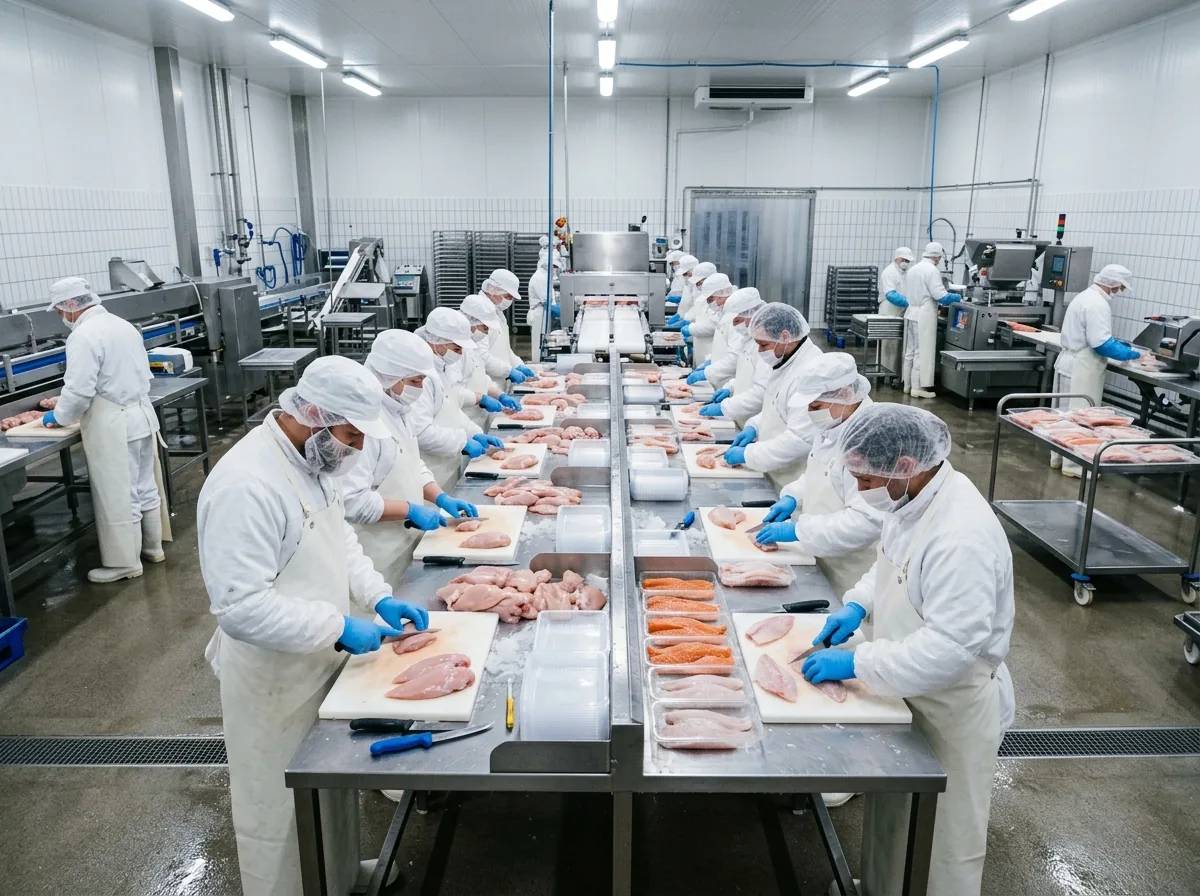
Animal protein is perishable, variable in weight and tightly regulated. Routeget connects receiving, yield, cold chain and traceability so each carcass, catch or tray is accounted for.
30+
clients served
$15M+
Savings Delivered
15+ yrs
Serving the Sector
20+
Projects Delivered
Meat, Seafood, Poultry and Eggs: where the market stands today
A fact base for planning. All figures below are third-party research estimates, not Routeget data, and they differ by how each firm defines the market.
Large, protein-led and regionally diverse
Poultry leads volume, while red meat dominates value in North America and parts of Europe. Seafood is rising with aquaculture. Feed costs and disease outbreaks create volatility.
About US$1.5-1.7 trillion (2024)
SkyQuest and Market Research Future place the combined meat, poultry and seafood sector at roughly US$1.52 trillion to US$1.73 trillion for 2024, depending on whether eggs and processed products are included.
2.9% to 6.3% CAGR
Reports cite roughly 2.9% to 6.3% CAGR, with the sector expected to pass US$2.2 trillion and approach US$3.0 trillion in the early-to-mid 2030s. Asia-Pacific is the largest and fastest-growing region.
Yield, traceability and cold-chain accuracy
Thin margins and strict oversight reward accurate yield accounting, instant lot genealogy, and cold-chain data tied to each shipment.
Sources: SkyQuest Technology (meat, poultry and seafood); Market Research Future; Market.us (CAGR range); Technavio and Fortune Business Insights (regional and driver analysis). Estimates retrieved October 2026 and subject to each publisher’s definitions; verify against the publisher before citing externally.
End-to-end digital transformation
Strategy, platform selection, integration and data work delivered as one programme.
Food-industry data models
Lot, recipe, yield and co-product structures designed for process manufacturing.
Traceability by design
Forward and backward lot genealogy built into inventory and quality workflows.
Plant-floor integration
Connections between production lines, scales, quality systems and the warehouse.
Four pressures that shape meat, seafood, poultry, eggs operations
These are the recurring problems we see when slaughter, processing, packing and cold-storage operations run on disconnected systems.
Yield and trim loss by cut
Value is lost between carcass or catch and finished cuts. Without accurate disassembly yields, product margin is guesswork.
Traceability across batches and animals
Authorities and retailers expect traceability from farm or vessel to pack, often within hours.
Cold chain and short shelf life
Time and temperature decide value. Delays between processing, storage and dispatch cause write-offs.
Variable weight pricing
Catch-weight orders, price per kilogram and pack weights make invoicing and inventory valuation error-prone.
Capabilities built for slaughter, processing, packing and cold-storage operations
Pick the area closest to your priority. Each can be delivered on its own or as part of a wider programme.
Account for every kilogram from receipt through cutting and packing.
- Disassembly and cutting yields with value allocation
- Catch-weight inventory and invoicing
- Trim, rework and giveaway tracking
- Packing station data capture
Link every pack back to its source and forward to its customer.
- Lot genealogy from farm, vessel or supplier to customer
- Inspection and holds linked to batches
- Recall and withdrawal simulation
- Audit evidence for regulators and retailers
Keep time and temperature attached to the product.
- Cold storage with zone and shelf-life rules
- Integration with temperature monitoring
- Dispatch planning for refrigerated transport
- First-expired-first-out picking
Price and report on products whose weight and value vary.
- Price-per-kilogram contracts and customer pricing
- Margin by species, cut and customer
- Livestock or catch purchasing settlement
- Inventory valuation for variable-weight stock
Two scenarios where connected data changes the day-to-day
These are illustrative scenarios that describe the business objective. They are not customer case studies.
From carcass or catch to margin by cut
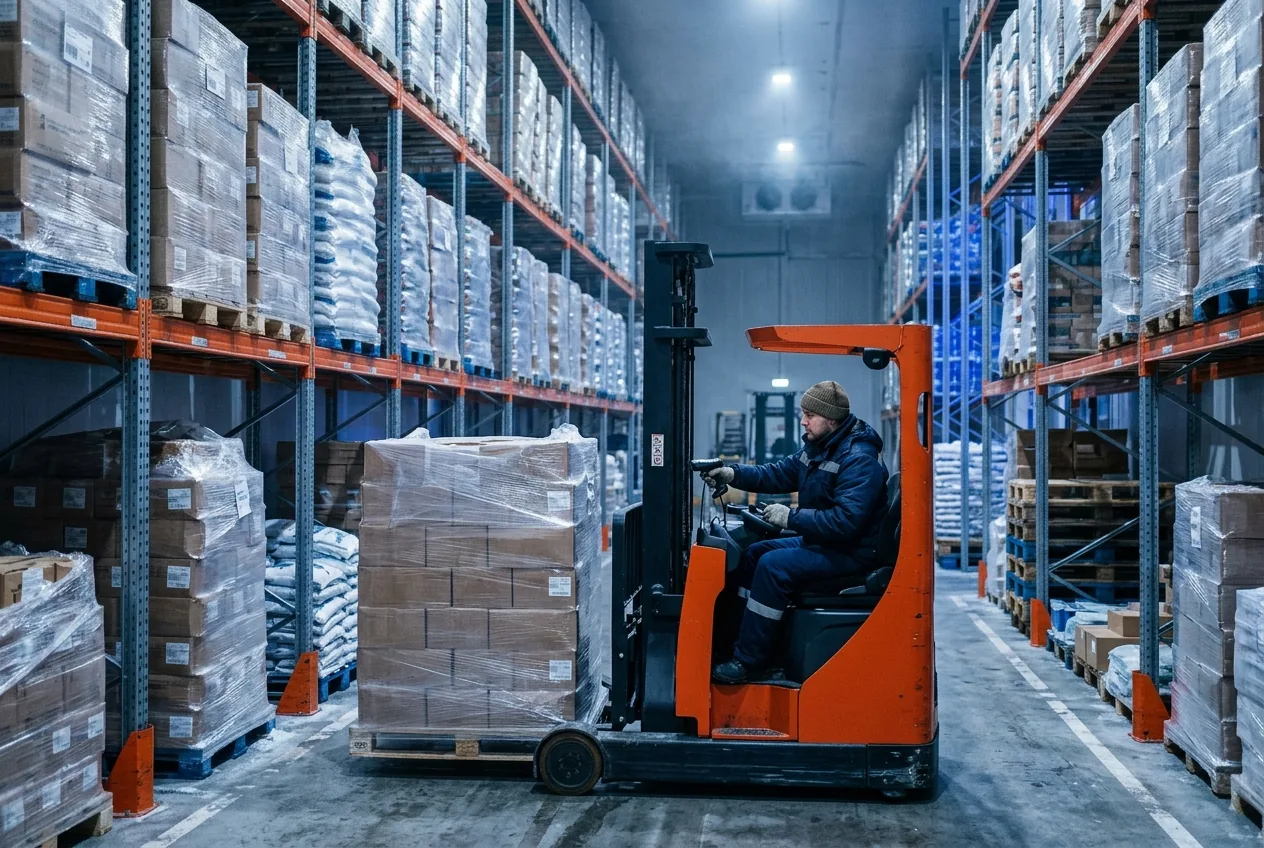
Each carcass or landing is received as a lot. Cutting records yield and allocates cost by value, so margin is visible for every cut and customer.
Business objective: price and sell cuts using accurate cost and yield.
Regulator-ready traceability in hours
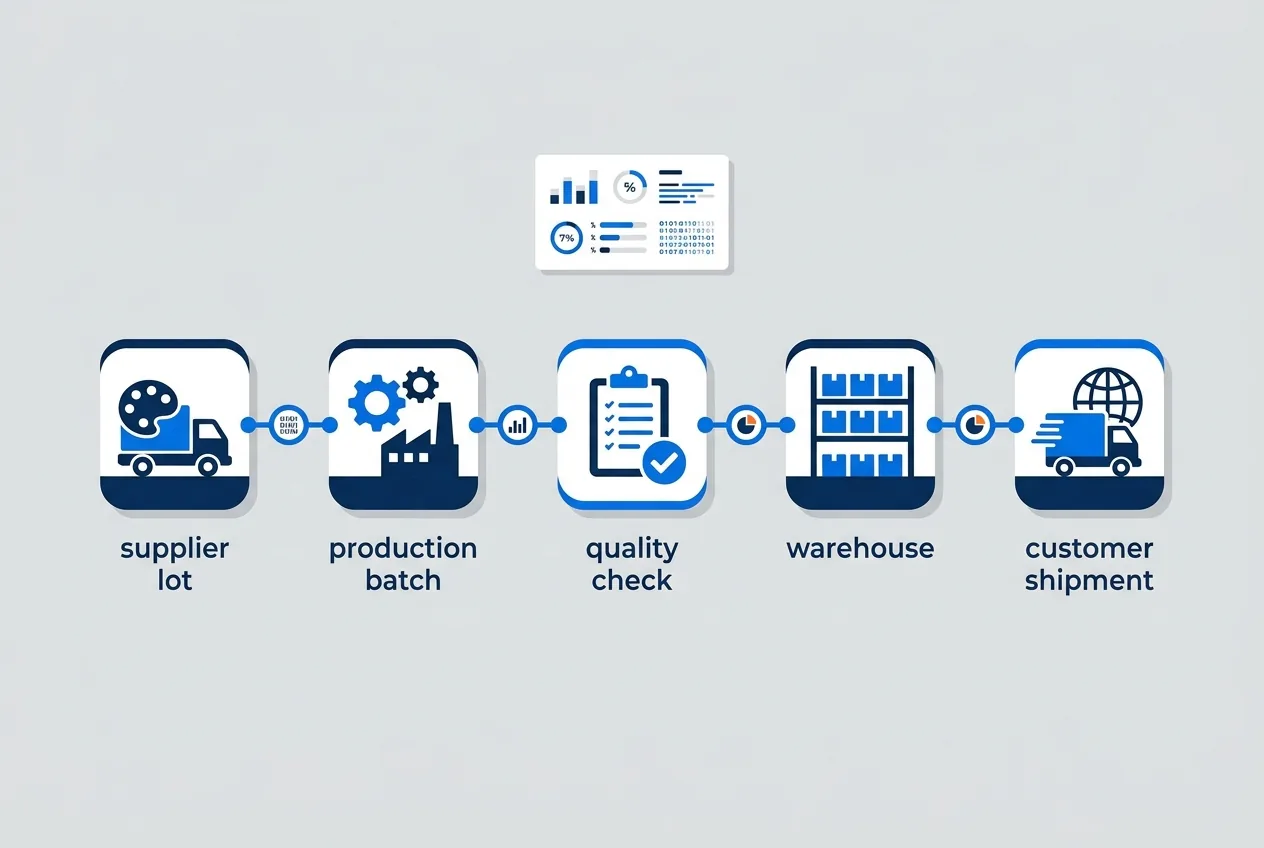
A retailer queries a product code. Quality retrieves the supplier lots, processing records, storage history and delivery destinations on one screen.
Business objective: answer queries fast and with complete records.
How we approach delivery and evidence outcomes
We do not publish unverified customer figures on industry pages. This is how we make outcomes measurable in an engagement.
Baseline first
We agree the starting measures with you before design, such as yield by cut or species, giveaway and trim loss and recall response time.
Delivery in stages
Releases are phased by site and process, so each stage is tested against real operations before the next.
Measured against your targets
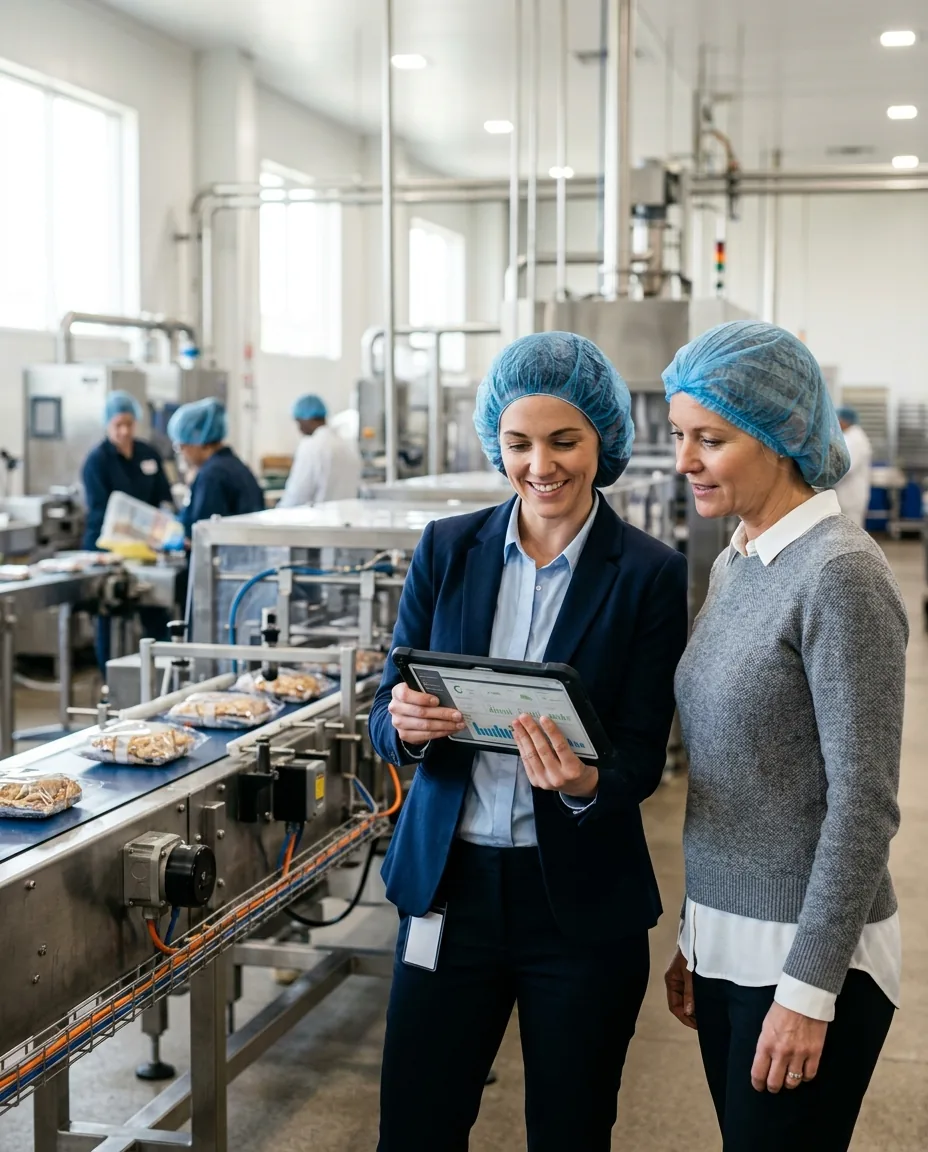
Dashboards report the baseline measures from go-live, so benefit is judged on your data.
Examples of Routeget engagements can be discussed in a discovery call, subject to client approval for each reference.
Why Routeget for meat, seafood, poultry, eggs
We bring a delivery approach built around the realities of catch-weight products, short shelf life and strict regulatory oversight.
Catch-weight and yield depth
We handle variable weights, cuts and disassembly yields as standard, so value is allocated across every product that comes from one animal or catch.
Integrated, not stitched together
Receiving, processing, quality, cold storage and finance share one data model, so operational and financial records reconcile.
Phased, low-disruption rollout
We plan releases around holiday demand peaks and supply disruptions such as disease outbreaks to protect service levels.
Data you can act on
Analytics are designed with your operations team, so measures reflect how your plants actually run.
Related reading from the Routeget team
Perspectives on the supply chain, data and integration topics behind this industry.
Why Automating our Supply Chain is Crucial to your Business Success
Why supply chain automation matters for service levels, cost and resilience.
The Evolving Landscape of Data Modernization Engineering
Trends in data modernization engineering and how they affect enterprise platforms.
AI attracts a new generation while assisting Argentine small producers and winemakers in competing
How AI is helping small producers compete in demanding markets.
Explore adjacent industry practices
Plan your meat, seafood, poultry, eggs digital foundation with Routeget
Book a 30-minute discovery to walk through your processing plants, cold storage and distribution and your priorities with a Routeget industry specialist.
Your details are used only to respond to this enquiry. See our Privacy Policy.
Meat, Seafood, Poultry, Eggs: questions buyers ask us
How do you engage with a meat, seafood, poultry, eggs business?
We usually start with a short discovery and a process review of one processing plant and its cold storage flow. From there we propose a phased scope, which can be fixed-scope for defined releases or a time-and-materials team for ongoing improvement.
Can you handle catch-weight products and price-per-kilogram invoicing?
Yes. We configure dual units of measure so quantity, weight and price reconcile in inventory, orders and invoices.
How do you support traceability to farm or vessel?
We link supplier and farm or vessel identifiers to receiving lots, so traceability continues through processing to the customer. The depth depends on the data your suppliers provide.
Who owns the data and the configuration?
You do. The solution runs in your own environment, and configuration, data models and reports are documented and handed over so your team can maintain them.
How do you approach pricing and timelines?
Pricing and timing follow scope, including the number of plants, product types and catch-weight formats. We share an estimate after discovery, with assumptions and exclusions stated, and we confirm timelines only after reviewing your landscape.